

Pyrrhic Saving
“Saving” money by spending more

Hello!
From last week’s Volcanic Explosivity Index a number of people asked about:
Vesuvius and Pompeii: a 5 – Paroxysmal like Mt St Helens
And Krakatoa: a mighty 6 – Colossal
And thanks for everyone who completed the podcast survey from last week. Thanks for the kind comments and we will take all feedback onboard to keep making it better.
Separately, Amazon has Big Ideas Little Pictures at +30% off (definitely not a pyrrhic saving 😅)
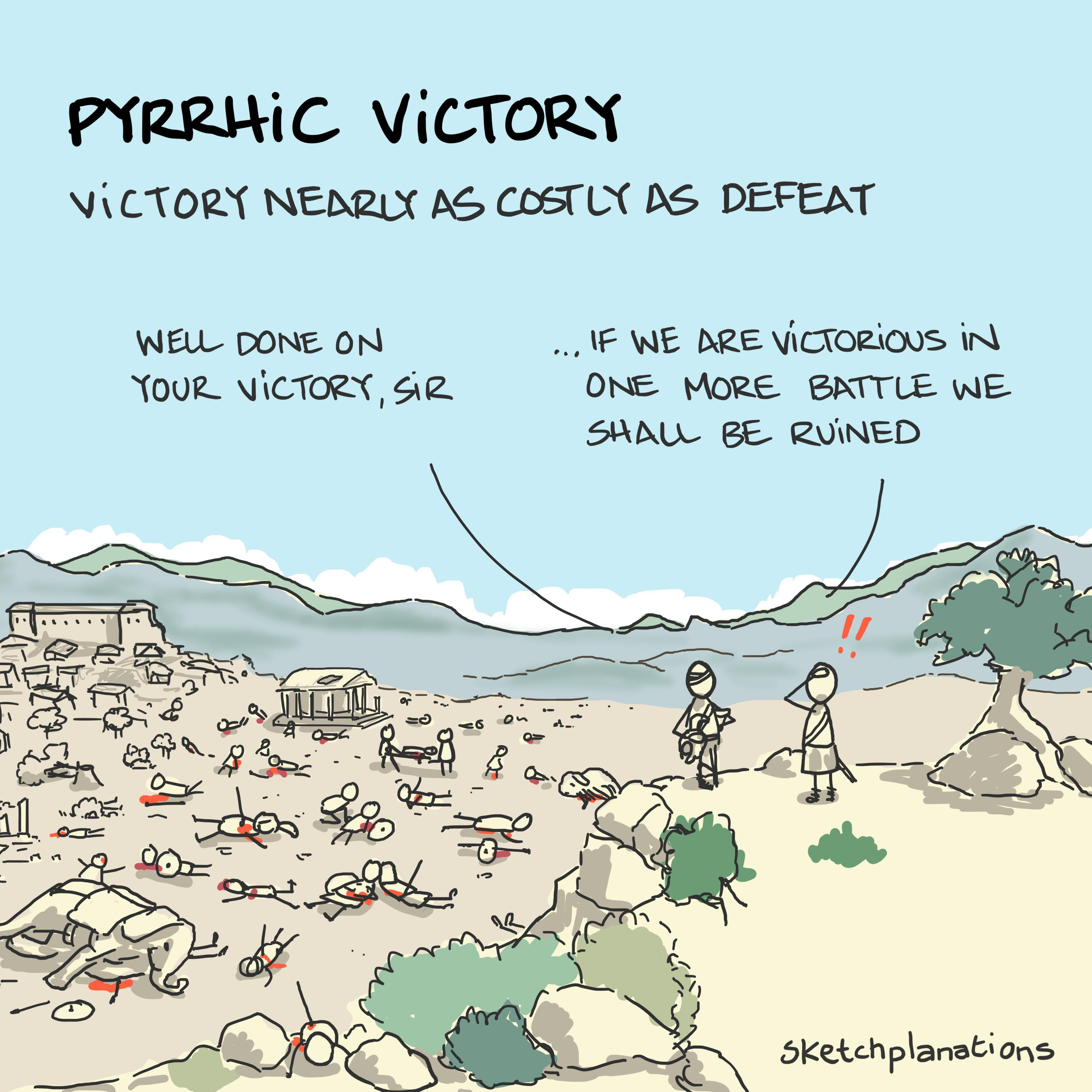
For this week, perhaps you’ve heard of a Pyrrhic victory: a victory so costly that it feels almost like a defeat.
The name comes from the tale of King Pyrrhus of Epirus in 279 BCE. On defeating the Romans, yet seeing the loss of so many of his best warriors, he declared, “If we are victorious in one more battle, we shall be ruined!” It’s an apparent gain that comes at too high a cost.
Perhaps you’ll recognise then, a Pyrrhic saving.
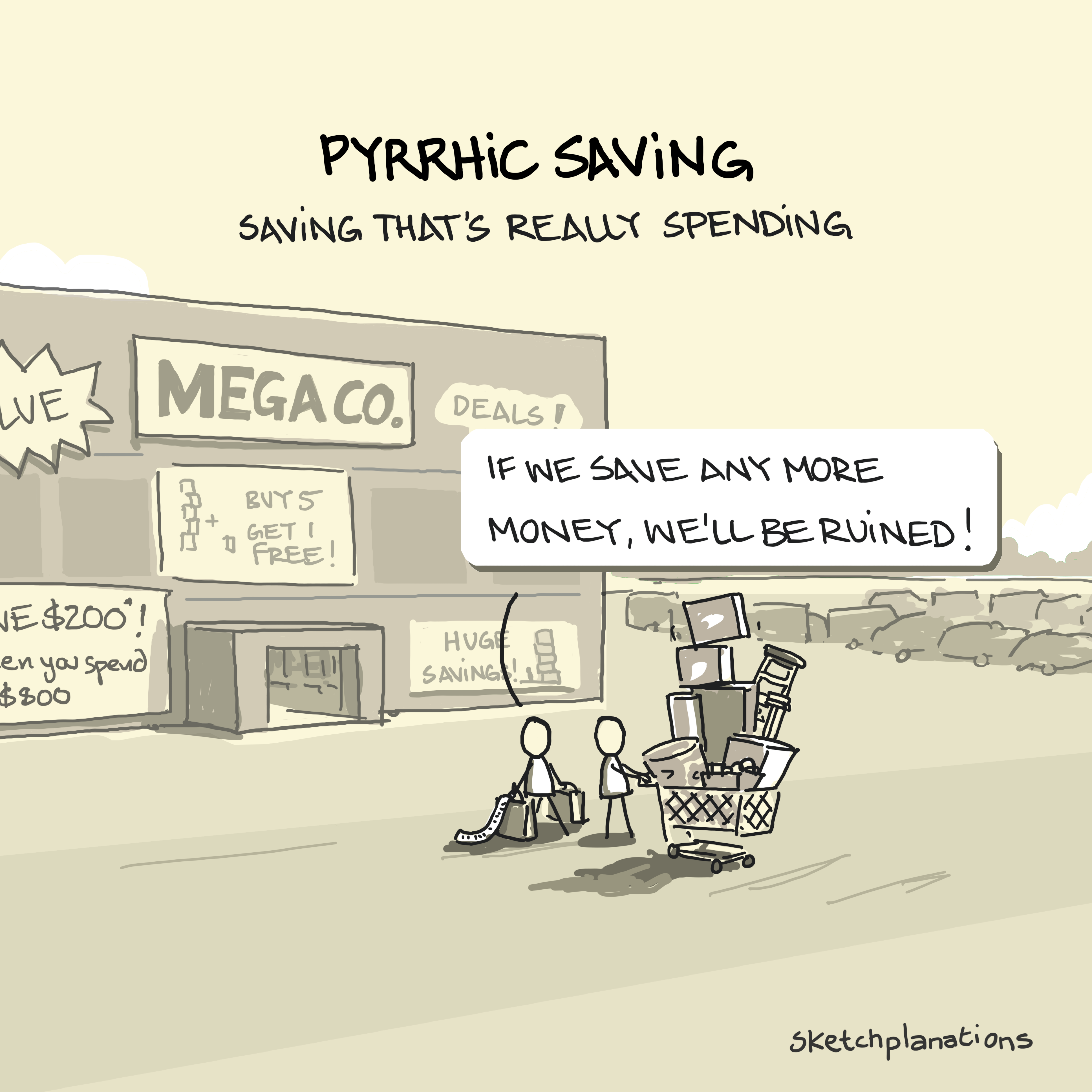
A Pyrrhic saving is a saving that costs you more than it benefits you—spending more to save money you wouldn’t otherwise have spent.
“If we save any more, we shall be ruined!”
Ever bought something you didn’t need just because it was on sale? Or chosen the bundle when you only wanted one? These are Pyrrhic savings. A saving money trap disguised as a bargain.
Some personal Pyrrhic saving examples:
A £20 voucher that has you spending another £40 to use it.
Low-cost memberships that make you buy more than you would have done (Prime?).
Going to buy one digital download and choosing the discounted pack of three, then never using the other two.
A free kids’ meal that results in eating out as a family when you would otherwise have stayed in.
In business, it can look similar:
Getting the larger office space that’s cheaper per square foot, but largely sits empty.
Upgrading to the higher software tier because it’s a better deal, yet barely using the extra features.
Bulk-purchasing inventory at a discount that ties up cash and costs you to store.
Locking into a multi-year contract at a saving when you would otherwise have switched.
Saving money is satisfying. And sometimes a saving genuinely pays you back. But it could be worth asking: is this truly a saving — or money better left for another day?
Related Ideas to Pyrrhic Saving
Also see:
no one budgets as frugally as my neurodivergent partner.