

Contentment and some key rings
What you have relative to what you want

If you’ve tried the Sketchplanations new tab Chrome extension and liked it, would you be kind enough to leave a quick review? It has a lowly one review at the moment =)
And a thank you to new paid subscribers over the winter break. You are awesome.
At the end some key-rings, but now some thoughts on happiness:
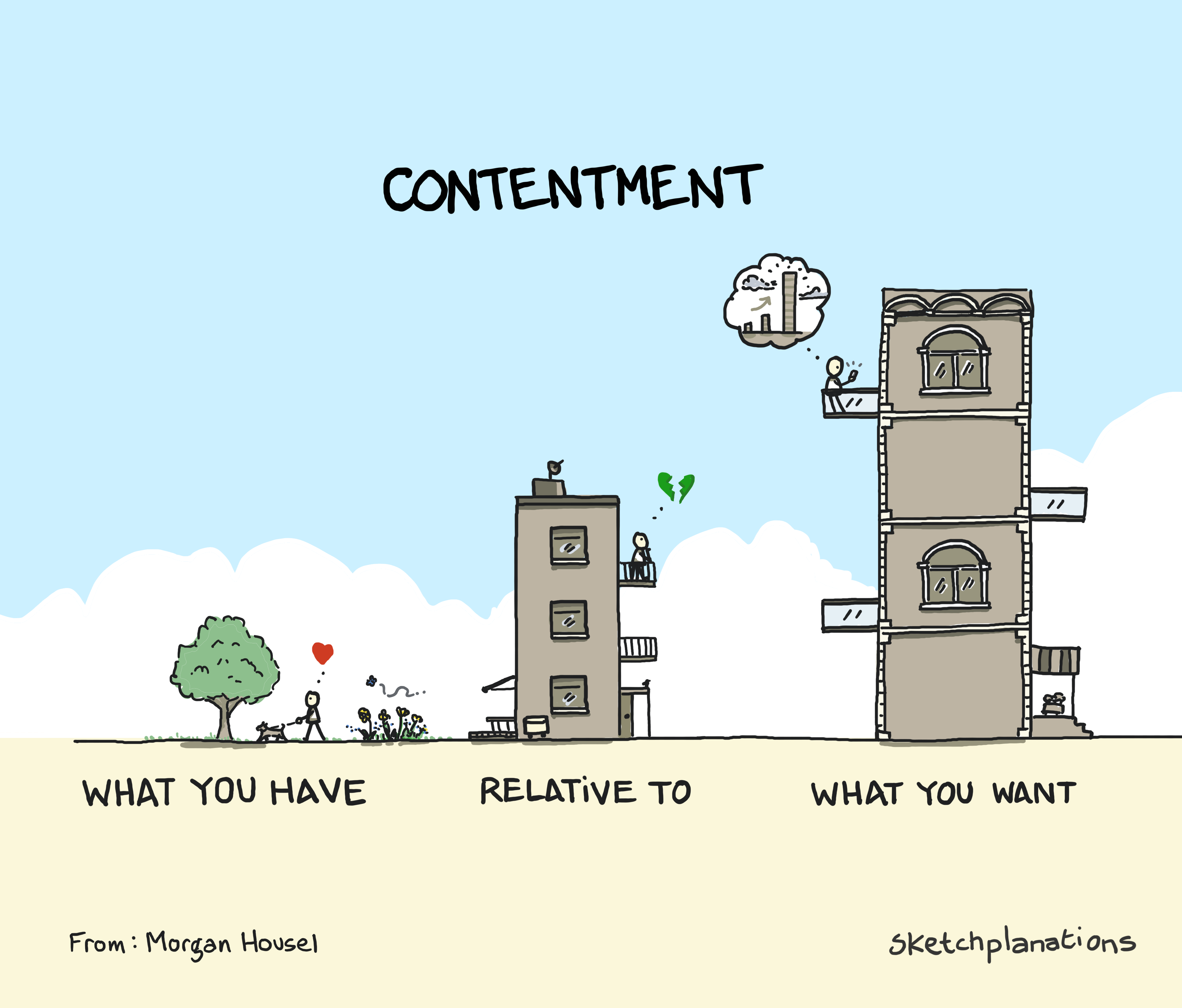
Morgan Housel, in his book The Art of Spending Money, says that contentment is what you have relative to what you want.
If you have money for a life full of comforts but envy a more glamorous one, you will make yourself unhappy. If you have a simple life with friends, family, health, and interests, and don’t want anything more, then you will be happy as you are.
Money makes this visible, but the same rule applies to almost everything: time, relationships, status, health, and freedom.
Being content with what you have is a counter to the hedonic treadmill: how people can easily get used to a better situation and start longing for the next thing (been on the list to sketch for a long time!). As Morgan says, “If your expectations grow faster than your income, you will never be happy with your money.”
It’s funny how knowing that someone or something has something better can affect your own satisfaction with what you have.
“If I hadn’t seen such riches, I could live with being poor.”
— from Sit Down by James (video)
I think about this song line quite often.
One of my favourite perspective shifts on this is comedian Louis C.K.’s Everything is Amazing, and Nobody is Happy clip with Conan O’Brien. He captures brilliantly how quickly our sense of what is normal inflates, even as life objectively improves.
Low expectations?
In a class on utility theory long ago, I remember mathematically seeing that if you expect little value, then you’ll be satisfied with whatever you get. And I’ve heard it said that the secret to happiness is low expectations. There’s something in it for sure, but it always seems like a double-edged sword to me.
Sure, if you expect your team to lose every time, you might not be bothered when they do. But if you hope that they’ll win, you can get some happiness from that excitement, too.
It’s always intriguing how supporters of better teams get more frustrated when they do slightly worse than usual, even while they are still doing much better than my team. Expectations are tricky. It’s so easy to recalibrate what counts as normal.
You can skip the ups and downs of supporting a team by not supporting one and not caring what happens. You avoid the downs, but you miss the ups, too. (see The Supporter’s Paradox in Big Ideas Little Pictures)
The late Queen Elizabeth II said it beautifully:
Grief is the price we pay for love.
— Queen Elizabeth II
You can skip the grief by not loving, but that seems a shame.
How life feels depends on what we expect as much as what we get.
—
However life is feeling as you get this, I wish you a great week ahead.
Below are some other sketches circling this topic that you might enjoy.
Jono
Related Ideas to Contentment
Also see:
Five Ways to Wellbeing (and podcast!)
Spend better: If money doesn’t make you happy, you’re not spending it right
Don’t compare your back of house with other’s front of house
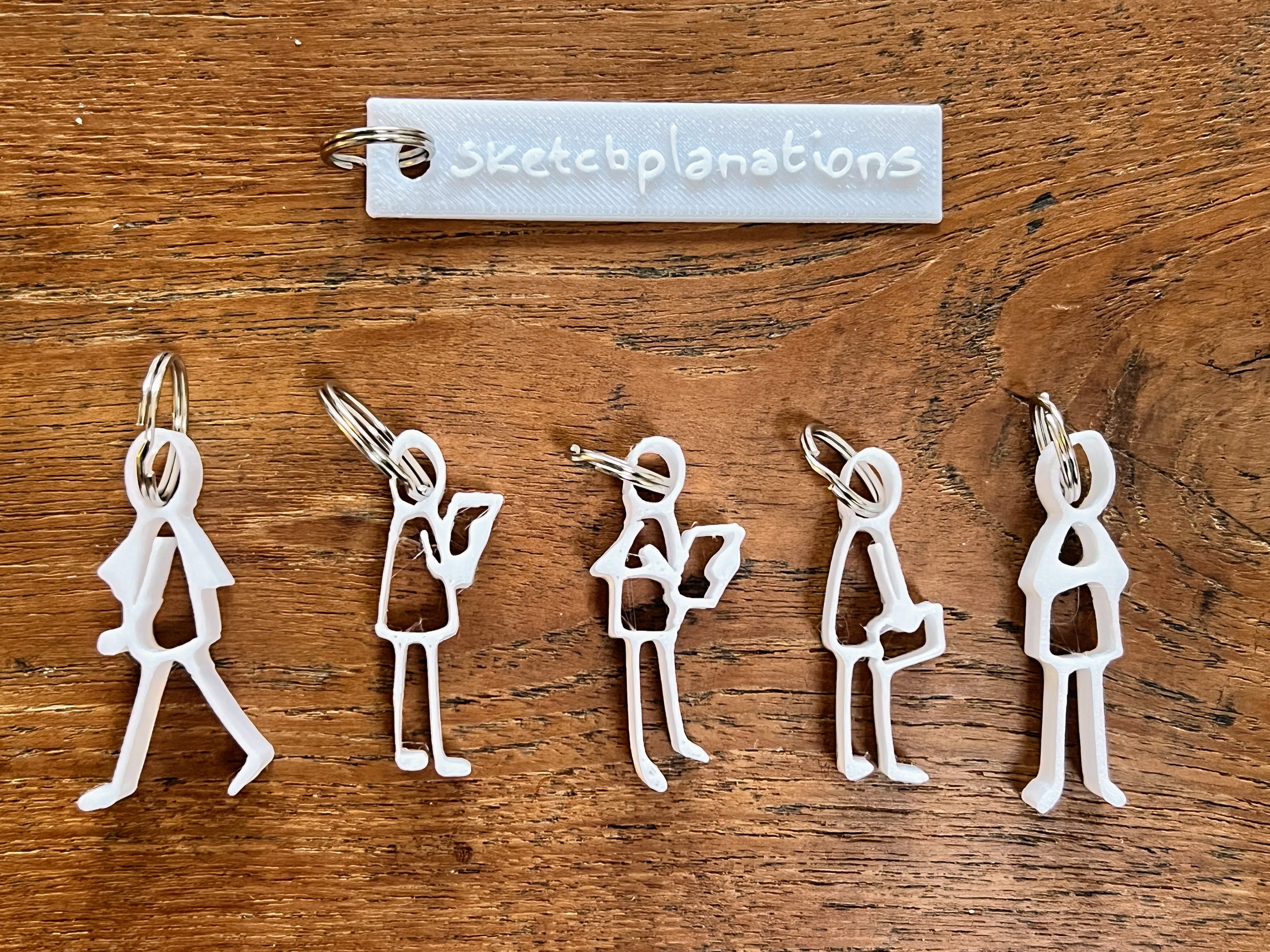
A friend of mine 3D printed these fun Sketchplanations key rings for me, people and all ❤️
I often think of a line from a Lord Huron song: 'I've got everything I want and I got nothin' that I need.' We're drowning in things, but are in need of kindness and human connection.
Love the keyrings and love your work. And yes. Contentment: Not arguing with reality! Absolutely.