

Buridan's Ass
When every option is equal, how do you choose?

Hello,
I hope you are having a good summer/winter and are not too hot/cold.
If you asked about Dunning-Kruger, I’ll get back to you soon, as I’ve had a short break.
This week, a philosophical puzzle/parable/thought experiment for you. How do you decide between equally good options?
Jono
It’s nice to think that we have a reason for what we do: It’s a good idea to do this, I really want to do that. But what if two choices are equally good? How do we choose then? That’s the situation for an ass (no snickering, please) in the thought experiment Buridan’s Ass.
What is Buridan’s Ass?
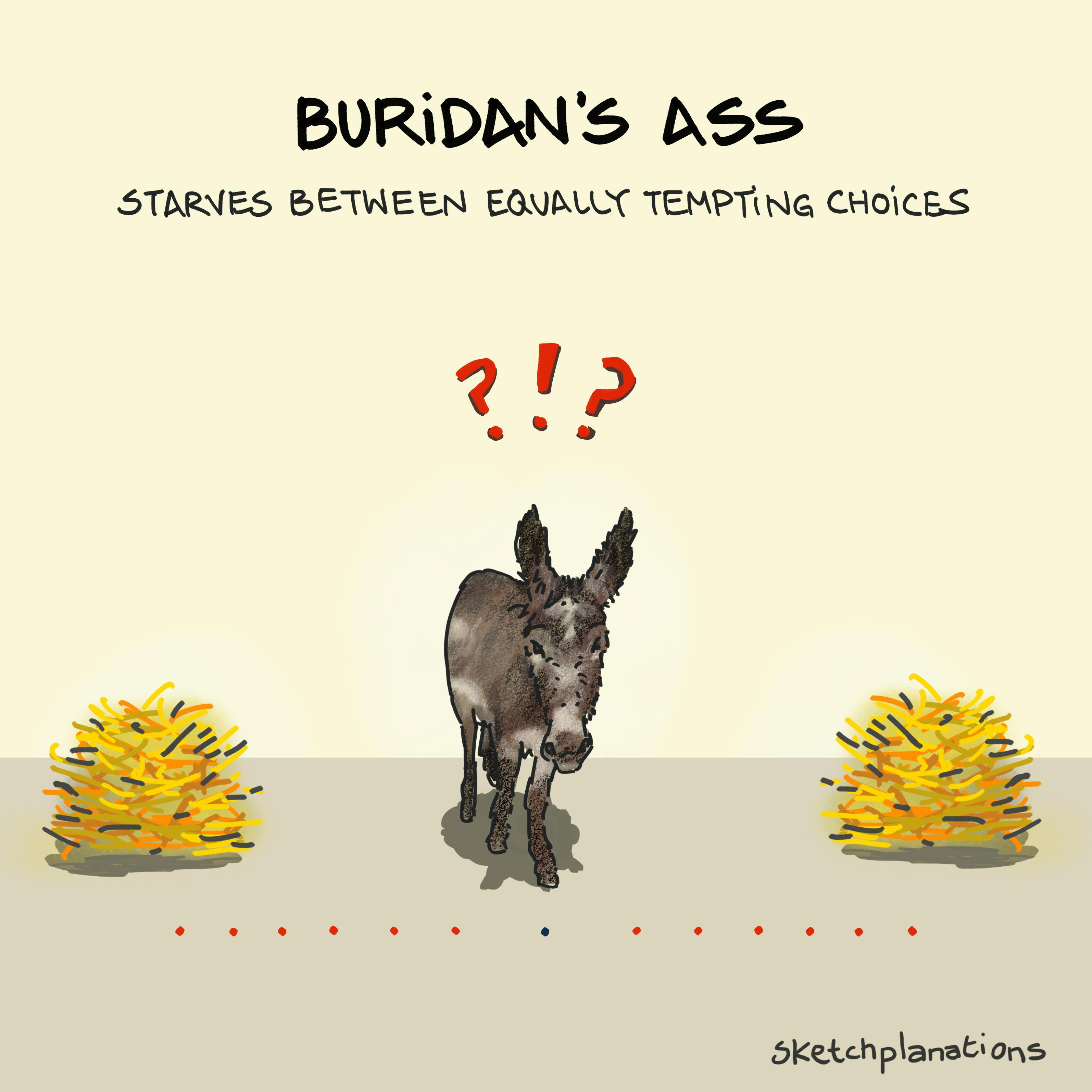
Buridan’s Ass is the puzzle where an ass is equidistant between two identical, equally tempting piles of hay. But with no reason to prefer one pile over the other, the poor ass remains stuck between them and eventually starves.
Philosophically, the puzzle is: can a rational agent choose between two equally good options when there’s no reason to prefer one over the other?
Some examples
If someone offers you a choice of two £10 notes, one in the left hand, one in the right hand, how do you decide which to take? No doubt the choice wouldn’t paralyse us like poor Buridan’s Ass, but it’s not always clear how we choose.
Perhaps you’ve been in a situation where a group of you need to choose a restaurant, everyone’s hungry, and everything sounds good. It may seem like a generous thing not to express a restaurant preference, but it can be frustrating when it doesn’t help narrow down the options.
“Always left”
Sometimes you don’t need a better choice, you just need a way to choose.
Many years ago I spent a winter in the Alps where I got to ski regularly with a few friends. We constantly came to junctions where, between us, we had to decide which way to go. But there was usually no clear logical way to choose between the routes, so we developed the mantra “Always left”. There was nothing special about left, and no doubt it was not as good as right many times, but at least it helped us not get stuck at the junction. I still use it to this day.
Tie-breaking
In computer programming, an algorithm can easily evaluate two alternatives as exactly equal. Maybe you can picture a bad guy in a video game stuck because two routes score exactly the same. The program needs some way to break the tie: choose the first, choose left, or even choose randomly.
Your two favourite things
A friend of ours had a young puppy. The puppy’s two favourite things were getting fed and running to bark at the door when someone knocked.
As luck would have it, one day my friend put down the puppy’s food just as someone knocked at the door. You could see the dog’s wide-eyed excitement bordering on panic. It was like the Buridan’s Ass problem played out in real life.
The dog ran towards the food, stopped, ran towards the door, stopped, then ran back, gobbled the food as fast as he could and skittered straight back to the door. He managed to resolve the dilemma.
Why is it called Buridan’s Ass?
The name Buridan’s Ass comes from the 14th-century French philosopher John Buridan, although the unfortunate ass doesn’t appear in his writings. It was attached to his name after his death, possibly as a parody of his ideas about free choice. Among other things, John Buridan wrote about choice, the will, and how we make decisions. Versions of the dilemma go back at least as far as Aristotle.
What ways do you use to decide between equally good options? Does choosing require a reason?
Related Ideas to Buridan’s Ass
Also see:
Feedback analysis (to improve your decision-making)
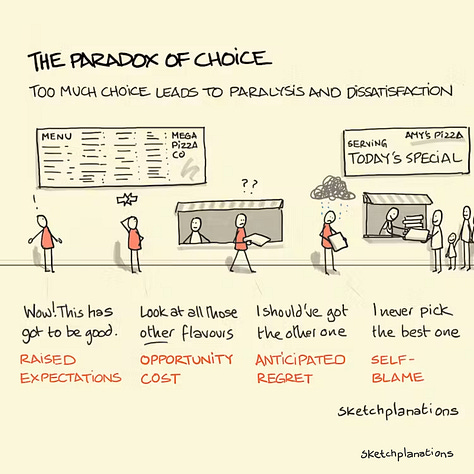
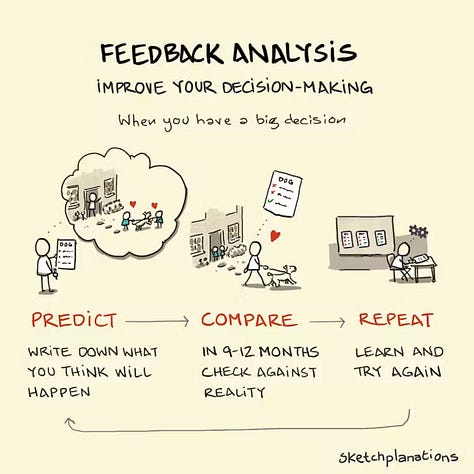
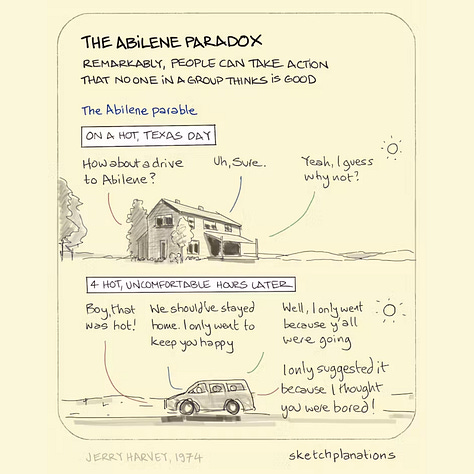
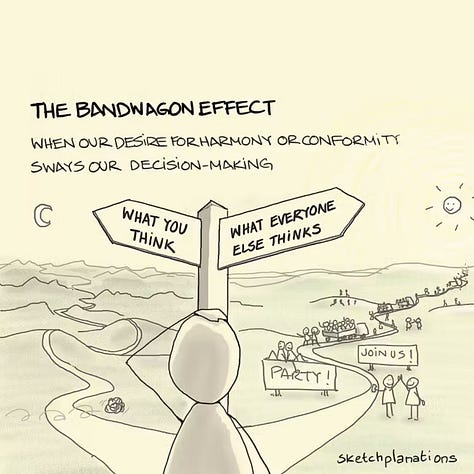
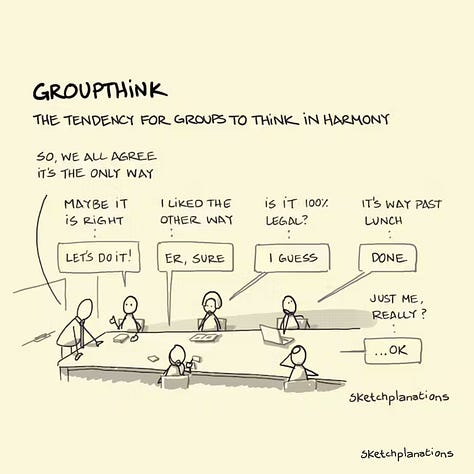
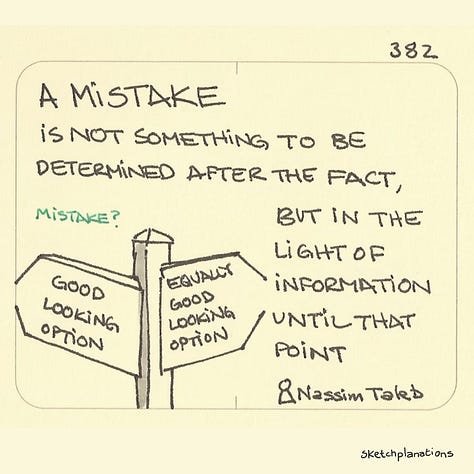
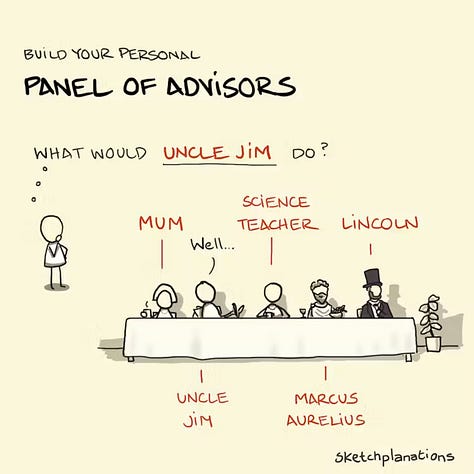
Some other puzzles, paradoxes and thoughts about choice and decision-making


In case you were wondering, I believe a donkey is a domesticated ass, and a mule is a common hybrid, being the offspring of a male ass (a jack or jackass, no less) and a female horse. The reverse—a male horse and female ass—produces a hinny.
I learned about Buridan’s Ass from a reader suggestion on the website. Thanks, Samuel 🙏
Wonderful article.
In the US Navy, shipboard deck officers are taught to “Think right, turn right”.
If another ship is coming from your right side (ie your starboard side), the other ship has the right-of-way and it is your legal responsibility to turn right (to starboard) to avoid collision.
This follows the International rules of the road at sea.
- - - “International rules of the road” refers to the International Regulations for Preventing Collisions at Sea (COLREGs)—the standards ships follow to avoid collisions on the water.
In a crossing situation (risk of collision), the vessel with the other on its port (left) has the right of way obligations (the other one must generally give way). - - -
The next time you’re skiing and come to a junction, consider turning right instead of left.
While this resonates with me, it’s not quite right for the situation I repeatedly find myself in.
Does anyone know what it’s called when you have two (or more) equally good choices, and instead of choosing one, split your time, effort, money, or other resources trying to get both and ending up with nothing?
I fear the full realization and acceptance of the above would just lead me to become Burdian’s ass, trading one bad outcome for another.